
Our Blog

Answer Engine Optimisation Explained: How AEO Differs From Traditional SEO

aeo-blog

Search has evolved far beyond simply typing a few words into Google. People now rely on tools like ChatGPT, Perplexity, Copilot, Gemini, voice search, and other AI-driven platforms to get instant answers. These platforms, often referred to as answer engines, are transforming how information is delivered and consumed.

Businesses and digital marketing agencies must understand this shift because implementing Answer Engine Optimisation (AEO) is crucial for maintaining visibility on search engine results pages. AEO is not replacing SEO but adds another layer that enhances how content is found and displayed, especially in answer boxes and conversational searches.

What Is Traditional SEO?

Search Engine Optimisation (SEO) focuses on improving rankings in search results to attract organic traffic. It involves keyword research, on-page optimisation, technical improvements, and building authority through backlinks. Digital marketing agencies have traditionally centred their strategies on SEO to help clients achieve higher rankings and more website visits.

SEO’s core goal has always been to generate clicks and traffic. It aims to capture users searching broadly for topics or products, guiding them from the results page to a brand’s website.

The Rise of Answer Engines

The internet is now full of platforms that could be referred to as answer engines. These include search engines like Google, voice assistants like Alexa and Siri, and AI tools like ChatGPT. These engines aim to provide direct answers instead of a list of links.

The main types of answer engines include:

  • Search engines delivering featured snippets
  • Voice search tools providing spoken responses
  • Generative AI platforms summarising information
  • Knowledge graphs and panels in search results

Answer engines leverage vast data sources and AI to interpret natural language, understand context, and deliver concise, trustworthy information. For users, this means quicker, clearer answers. For businesses, it introduces both challenges and opportunities.

What Is Answer Engine Optimisation (AEO)?

Answer Engine Optimisation (AEO) focuses on helping your content appear as a direct answer in answer engines. AEO requires writing precise, well-structured information that engines can extract easily and display in featured snippets, voice search results, and knowledge panels.

AEO is crucial because it aligns with how people search today. Many queries are conversational, and answer engines use advanced AI to interpret them. To support AEO, content needs to be crafted not only for human readers but also in a format machines can understand and repurpose.

AEO differs from traditional SEO in several ways:

  • Purpose: While SEO drives traffic to websites, AEO aims to have your content featured in answer boxes and spoken aloud in voice searches.
  • Format: AEO content is concise, often in Q&A, list, or table formats.
  • Technology: AEO relies heavily on structured data like schema markup so search engines can identify and extract relevant information.
  • Performance metrics: AEO performance may not always translate into clicks, as many searches result in zero-click outcomes where the user gets their answer directly in the search results.
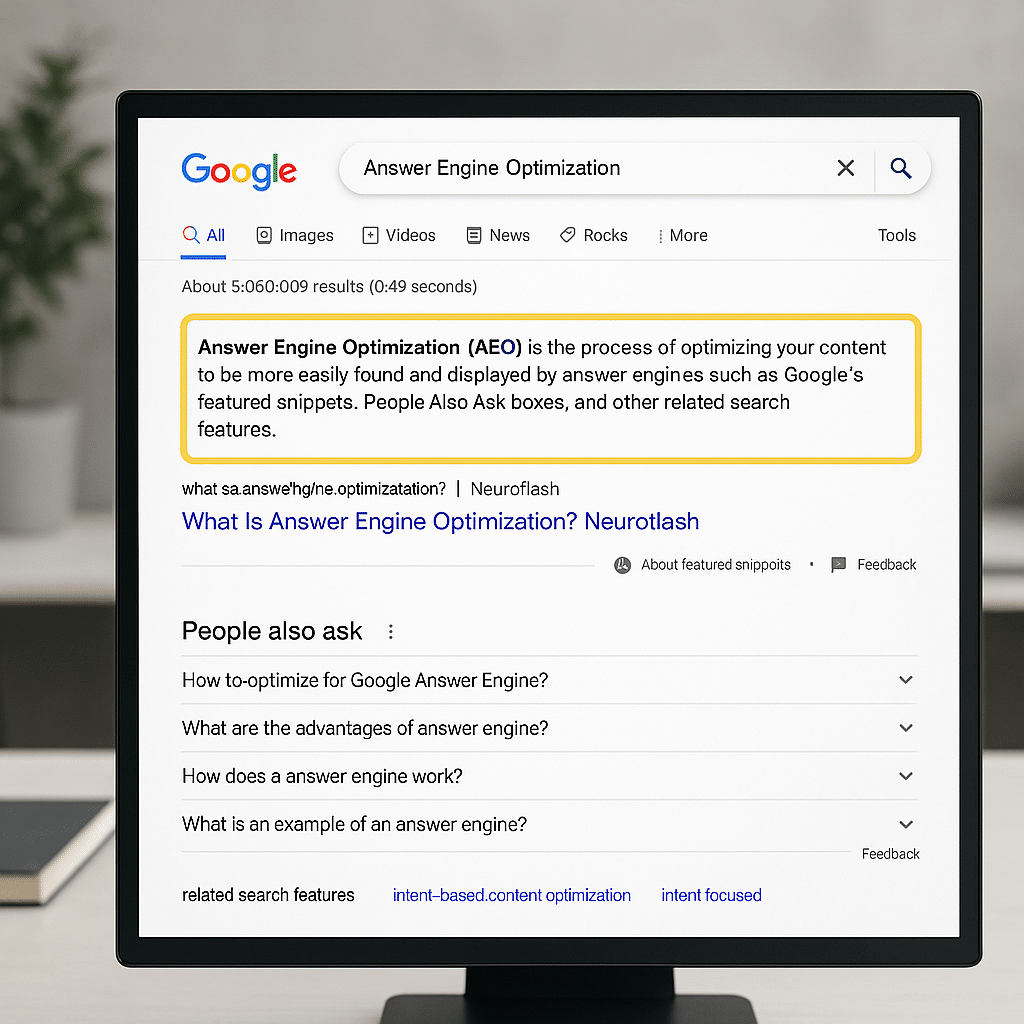
 

what is AEO

Implementing AEO requires understanding the types of questions people ask and ensuring your content provides clear, authoritative answers. Businesses can benefit from AEO because it builds credibility and brand recognition even if users do not always visit their website.

Types of Answer Engines

Let’s explore the main types of answer engines:

  • Traditional search engines like Google and Bing, which extract answers for featured snippets.
  • Voice search platforms, which deliver concise spoken answers.
  • Generative AI tools like ChatGPT, which summarise and explain topics conversationally.
  • Knowledge panels and graphs, which collect facts about businesses, people, and topics.
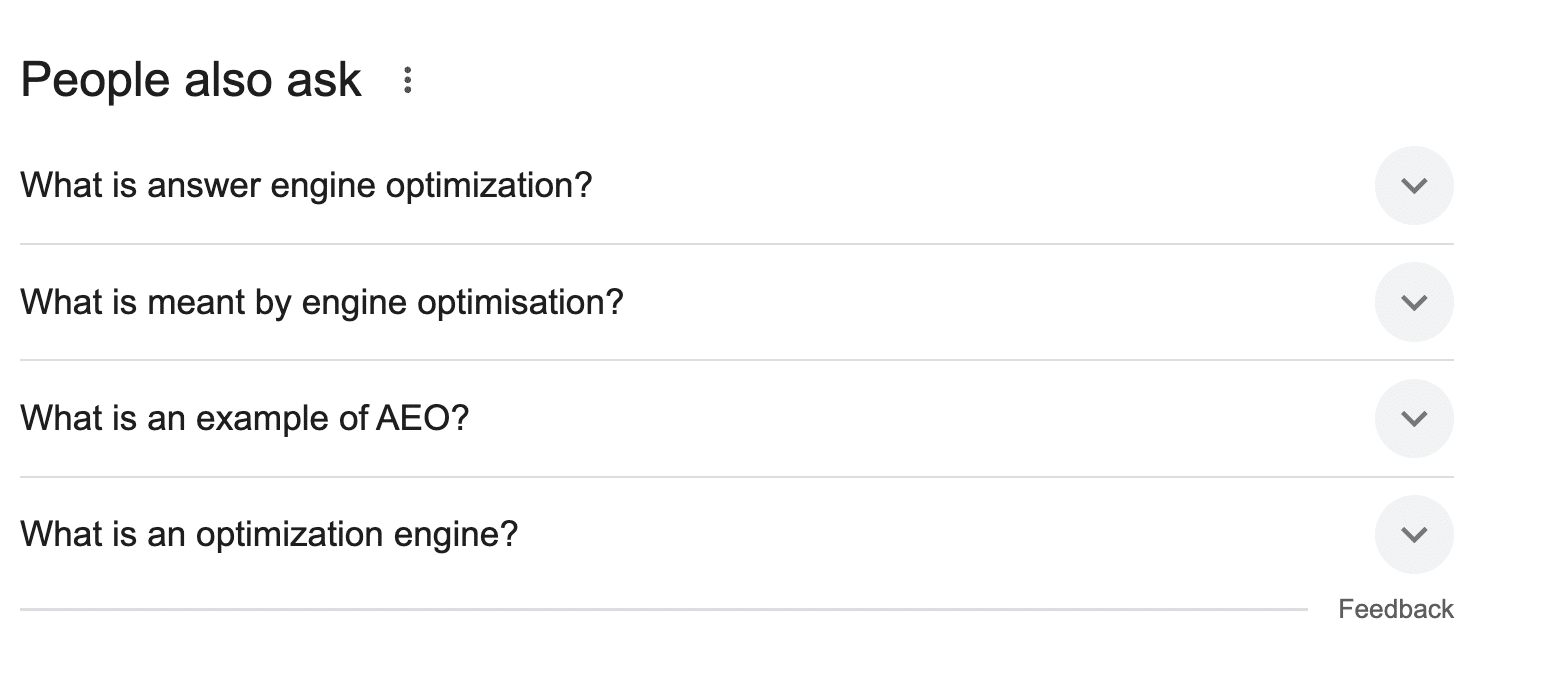
people-also-asked

These tools aim to satisfy queries quickly. Being visible in them is how AEO enhances a brand’s presence across digital touchpoints.

Why AEO is Crucial for Businesses

AEO is crucial for businesses aiming to remain competitive in digital marketing. As more searches become conversational or voice-driven, it’s essential to ensure your brand’s information is the answer users see—or hear.

Here’s how businesses can benefit from AEO:

  • Builds authority: Being featured in answer boxes signals that search engines trust your brand.
  • Improves brand recall: Users remember brands whose content answered their question quickly and accurately.
  • Adapts to zero-click searches: Even without website clicks, your brand remains visible.
  • Future-proofs your strategy: Voice search and AI are growing, and AEO prepares businesses for that shift.

Digital marketing agencies increasingly incorporate AEO into strategies for clients because it delivers visibility beyond traditional search listings.

How to Optimise for AEO

Here’s how businesses and marketing agencies can start implementing AEO effectively:

Understand What Users Ask

Research common queries in your niche. Use tools like People Also Ask, keyword research platforms, and AI assistants to discover how people phrase their questions.

Provide precise answers early in your content. An ideal snippet might only be 40-60 words. While you can expand with detail elsewhere, the core answer should be succinct.

Adding schema markup helps answer engines understand your content. Structured data signals the format and intent of your information, increasing chances of being featured.

Use headings, lists, and tables to make it easy for search engines to parse your content. Answer engines like structured layouts because they simplify information extraction.

Answer engines favour reputable sources. Cite credible references, update information frequently, and demonstrate expertise in your content.

Track which keywords trigger featured snippets or voice responses in your niche. Assess how well your pages appear in these results and refine your content accordingly.

Common Challenges of AEO

While AEO offers many advantages, it also presents challenges:

  • Zero-click searches mean users may get the information without visiting your site.
  • Competition for featured snippets and voice results is fierce.
  • Measuring AEO performance can be difficult because traditional metrics like click-through rates may not capture the value of appearing as the answer.
  • Balancing concise answers with in-depth content is an ongoing challenge.


Nonetheless, investing in AEO can enhance your brand’s online authority and ensure your content remains relevant as answer engines evolve.

The Future of AEO and SEO

Answer engine optimisation and search engine optimisation will continue to overlap, but their paths are diverging. While SEO remains essential for driving organic traffic, AEO is becoming equally important for capturing attention in answer engines like Google’s Search Generative Experience, ChatGPT, and voice assistants.

Voice search and AI are reshaping user behaviour. As these technologies become more sophisticated, they’ll rely increasingly on high-quality, structured content to deliver accurate answers.

Businesses and marketing agencies that integrate AEO into their strategies now are preparing for a future where search is less about browsing pages and more about receiving precise, conversational responses.

Answer Engine Optimisation (AEO) is a natural evolution of SEO. It doesn’t replace traditional methods but complements them. By focusing on how answer engines use content, businesses can maintain visibility in a landscape driven by AI, voice search, and conversational queries.

AEO can enhance brand authority, ensure your business is featured in critical answer boxes, and help you connect with users seeking immediate, reliable information. Whether you’re a business owner or a digital marketing agency, now is the time to understand how AEO differs from SEO and begin optimising your content to stay ahead.

FAQ About Answer Engine Optimisation (AEO)

What is the main goal of Answer Engine Optimisation (AEO)?

The main goal of Answer Engine Optimisation is to create content that provides clear, direct answers to user questions, helping your website appear in featured snippets, voice search results, and other answer-focused search features. AEO aims to improve visibility in answer engines and capture zero-click searches where users get the information they need without visiting a separate page.

AEO differs from traditional SEO because it prioritises short, precise answers written in a conversational tone. Content for AEO often uses structured formats like bullet points, numbered lists, and schema markup to make it easy for search engines and AI-driven tools to extract information. Traditional SEO tends to focus on longer articles, keyword placement, and driving users to click through to a website.

Zero-click searches are important because they reflect how users increasingly want fast answers without navigating away from the search results page. While zero-click results might reduce website traffic, being featured as the trusted answer can boost brand authority, visibility, and user trust. Optimising for zero-click searches through AEO helps businesses maintain a presence in evolving search experiences.

Examples of answer-focused content formats include featured snippets, People Also Ask boxes, knowledge panels, FAQs, and voice search results. These formats often display short, direct answers pulled from web content that has been optimised for answer engines through clear writing and structured data like schema markup.

Businesses can start implementing AEO strategies by identifying common user questions in their industry, writing concise and accurate answers, and using structured data such as FAQ schema. It’s essential to organise content clearly with headings, lists, and tables and keep information updated. Monitoring search results for featured snippets and other SERP features helps businesses adapt their AEO efforts for better visibility.

Contact Us Today

Category

Latest Blog

Contact Us

How Can We Help You?