
PPC for Lead Generation: Focus on Long-Tail Keywords
When it comes to PPC for lead generation, focusing on long-tail keywords can significantly enhance your results. High-volume keywords often attract a lot of traffic, but not necessarily the right kind. By targeting long-tail, high-intent phrases, you can reach a more specific audience that is more likely to convert into sales. This approach not only optimises your budget but also improves the quality of your leads.
- High-volume keywords often lead to wasted budget
- Long-tail keywords target high-intent audiences
- Better conversion rates with specific phrases
- Optimise your PPC strategy for quality over quantity
- Focus on audience intent to drive real results
Understanding the Drawbacks of High-Volume Keywords
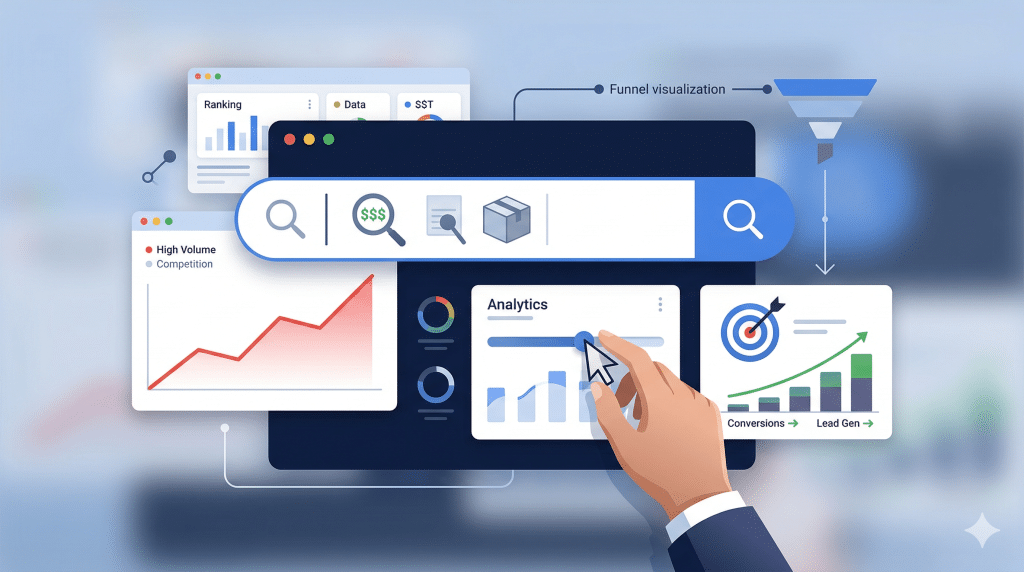
While high-volume keywords might seem enticing due to their broad reach, they often come with challenges that can undermine your PPC strategy. These keywords may draw a large audience, but frequently, this includes individuals who aren’t genuinely interested in your specific offerings. For example, a search for “best running shoes” might attract users merely seeking information rather than those ready to purchase. Consequently, although you might see high click-through rates, the lack of conversions can mean you’re spending a significant portion of your budget on clicks that fail to convert into sales. Moreover, the competition for these keywords is intense, leading to higher costs per click. Such competitive bidding can quickly drain your marketing funds, offering minimal returns. Consider the bidding wars over popular keywords like “insurance” or “credit cards,” which can drive costs to unsustainable levels, depleting your budget without delivering the expected results. Therefore, despite the appeal of high-volume keywords, the financial risks often outweigh the benefits. For a more strategic approach, consider partnering with an SEO Agency that specializes in Search Engine Optimisation to refine your strategy and focus on more targeted keywords that align with your business goals.
The Power of Long-Tail Keywords
Long-tail keywords, on the other hand, are more specific and less competitive compared to their high-volume counterparts. These keywords typically consist of three or more words, allowing you to target niche audiences with precision. By honing in on these keywords, you can attract users who are further along in the buying process, often referred to as the consideration stage. These users have a clearer idea of what they are looking for, whether it’s a specific product model, a detailed service, or a particular solution to their problem, and as a result, they are more likely to convert. For example, instead of targeting a broad term like “running shoes,” a long-tail keyword might be “best trail running shoes for beginners,” which speaks directly to a specific need.
- This approach allows you to capture high-intent traffic, which is crucial for effective lead generation.
- Moreover, targeting long-tail keywords not only lowers your cost per click due to reduced competition but also enhances your return on investment by significantly improving conversion rates.
- By focusing on these keywords, you can ensure that your marketing budget is spent attracting potential customers who are genuinely interested in your offerings, leading to more meaningful engagements and ultimately, successful conversions.
Enhancing Lead Quality with Specific Phrases
When you bid on long-tail keywords, you are more likely to attract high-quality leads who are deeply interested in what you offer. These leads have specific needs and are actively searching for solutions that your product or service can provide. For instance, a potential customer searching for “eco-friendly bamboo toothbrushes” is likely more committed to making a purchase than someone who simply searches for “toothbrush.” By addressing these needs through targeted ads, you can increase the likelihood of conversion. This approach ensures that your marketing dollars are spent effectively, reaching individuals who are already inclined to buy. This strategy is particularly effective for businesses offering specialised products or services, like niche software solutions or bespoke consulting services. High-quality leads are more valuable as they are more likely to result in sales, thereby contributing to the overall success of your PPC campaign. Moreover, focusing on long-tail keywords often means facing less competition, which can lead to lower bid prices and a higher return on investment.
Budget Optimisation Through Targeted Keywords
Focusing on long-tail keywords helps optimise your PPC budget effectively. These keywords, which typically consist of three or more words, are less competitive and therefore, generally cost less per click. For instance, instead of bidding on a high-volume term like “running shoes,” you might target “best trail running shoes for women,” which is more specific and less saturated. This allows you to allocate your budget more efficiently, ensuring that you get the most out of your investment. By targeting these niche phrases, you’re able to reach audiences with a clear intent to purchase, thereby reducing the cost per acquisition. This reduction not only boosts the profitability of your campaigns but also enhances your return on investment. Moreover, targeting specific phrases helps you avoid spending money on irrelevant traffic, ensuring that your budget is used to attract potential customers who are genuinely interested in your offerings. This precision in targeting means that you are more likely to engage with users who are further along in the buying cycle, thus increasing the likelihood of conversion and ultimately, expanding your customer base.
Implementing a High-Intent Keyword Strategy
To effectively implement a high-intent keyword strategy, start by researching and identifying long-tail keywords relevant to your business. Use tools like Google Keyword Planner to find phrases with lower competition and higher conversion potential. Once you have a list of keywords, create targeted ad groups and tailor your ad copy to address the specific needs of your audience. Continuously monitor and adjust your campaigns based on performance data to ensure that you are consistently attracting high-quality leads. This proactive approach will help you maintain a competitive edge in the PPC landscape.
Frequently Asked Questions
Why are long-tail keywords more effective for lead generation?
Long-tail keywords are more effective for lead generation because they target users with specific needs. These users are often further along in the buying process and are more likely to convert. By focusing on these keywords, you can attract high-intent traffic that is genuinely interested in your products or services.
Additionally, long-tail keywords are less competitive, which means they typically cost less per click. This allows you to optimise your budget and achieve better conversion rates, ultimately leading to more effective lead generation.
How can I identify the right long-tail keywords for my PPC campaign?
To identify the right long-tail keywords for your PPC campaign, start by analysing your target audience and understanding their needs and search behaviour. Use keyword research tools such as Google Keyword Planner to find phrases that are relevant to your business and have lower competition.
Once you have a list of potential keywords, test them in your campaigns and monitor their performance. Continuously refine your list based on conversion data to ensure you are targeting the most effective keywords for lead generation.
What are the risks of focusing solely on high-volume keywords?
Focusing solely on high-volume keywords can lead to wasted budget and low conversion rates. These keywords often attract a broad audience, including users who may not be interested in your offerings. This can result in high click-through rates but low sales, reducing the effectiveness of your PPC campaigns.
Moreover, high-volume keywords are highly competitive, leading to higher costs per click. This can quickly deplete your budget without delivering the desired return on investment, making it crucial to balance your strategy with long-tail keywords.
How does targeting long-tail keywords improve ROI?
Targeting long-tail keywords improves ROI by attracting high-intent traffic that is more likely to convert. These keywords are less competitive, leading to lower costs per click and a more efficient use of your budget. By focusing on specific phrases, you can increase conversion rates and reduce the cost per acquisition.
This targeted approach ensures that your PPC campaigns deliver better results, ultimately leading to a higher return on investment and more successful lead generation efforts.
Can long-tail keywords benefit all types of businesses?
Yes, long-tail keywords can benefit all types of businesses, particularly those offering specialised products or services. By targeting niche audiences, businesses can attract customers who have specific needs and are more likely to convert. This approach is effective for both B2B and B2C companies looking to improve lead quality and conversion rates.
Even businesses with a broad target market can benefit from long-tail keywords by segmenting their audience and creating tailored campaigns for different customer needs. This strategy helps optimise PPC efforts and drive better results across various industries.