
Google’s Broad Match: Now Budget-Friendly
Google Ads has significantly revamped its Broad Match feature, transforming it into an exceptionally valuable tool for advertisers of all sizes. This update allows businesses to optimise their ad spend more effectively, ensuring that their marketing dollars are used more efficiently and precisely. Previously, advertisers were often wary of Broad Match due to its potential for wasting budgets on irrelevant clicks. However, the new version incorporates advanced machine learning algorithms that better understand user intent, matching ads with more relevant searches. For instance, a company selling eco-friendly cleaning products can now reach an audience searching for sustainable home solutions, even if the exact keywords aren’t used. This improved targeting capability means businesses can achieve better returns on investment without the constant fear of overspending on non-converting traffic. By grasping the intricacies of the new Broad Match dynamics, marketing professionals can strategically leverage this feature to enhance their advertising strategies, ultimately driving more qualified leads and increasing overall campaign effectiveness.
- Google’s Broad Match has been improved for better ROI
- Advertisers can now target more relevant keywords
- SEO Agencies can benefit from more effective ad spend
Understanding the Evolution of Broad Match
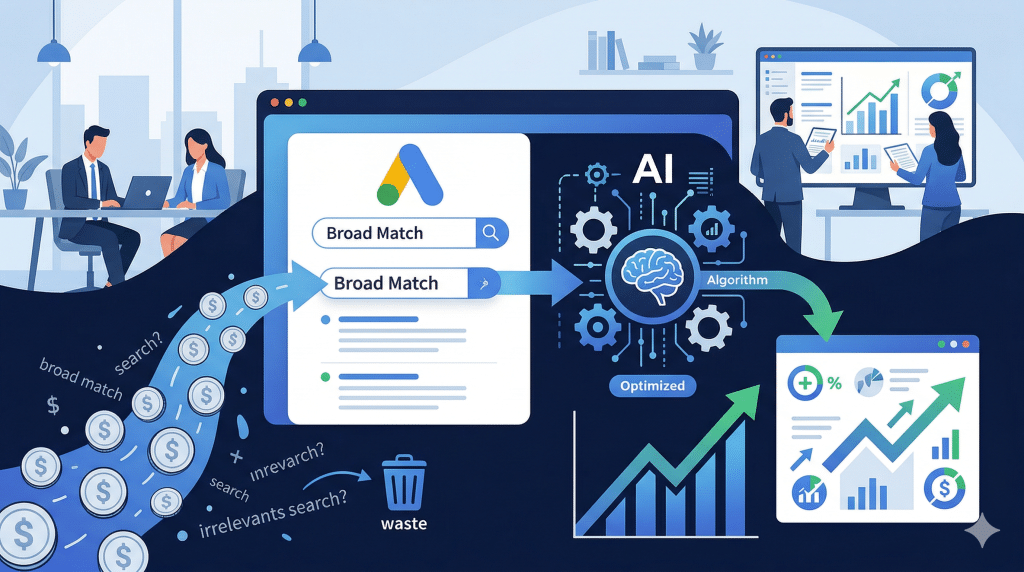
Broad Match has long been seen as a double-edged sword in Google Ads. Originally, it had a reputation for draining budgets due to its vague targeting, often leading to ads appearing for unrelated searches. For example, a business selling high-end watches might have found their ads showing up for searches like “watch repair” or “cheap watches,” which didn’t align with their target market. Recognizing these challenges, Google has listened to feedback from advertisers and made significant adjustments. Now, Broad Match uses advanced algorithms and machine learning to better understand user intent. This means ads are shown to more relevant audiences, reducing unnecessary spend and increasing the likelihood of conversions. Google’s improvements include refining keyword matching, leveraging search history, and analyzing context clues to ensure that ads reach users actively interested in what’s being offered. This strategic enhancement allows businesses to connect with potential customers who are more likely to engage, leading to a more efficient use of advertising budgets and ultimately boosting the return on investment (ROI).
The Role of Machine Learning in Broad Match
Machine learning plays a crucial role in the new Broad Match, revolutionizing how advertisers connect with potential customers. Google leverages its vast data resources to predict user behaviour with remarkable precision. By analysing various factors such as search patterns, location, and device usage, Broad Match can now connect ads with users who are more likely to engage. For instance, if a user frequently searches for vegan recipes and uses a mobile device in urban areas, Broad Match can target ads for local vegan restaurants or plant-based product subscriptions. This intelligent targeting system allows businesses to reach potential customers without wasting resources on irrelevant clicks, making it a cost-effective option for advertisers.
Furthermore, the advanced algorithms consider the context of the search query, understanding nuances that might have been missed previously. For example, a search for “running shoes” could trigger ads not just for shoes but also for related products like fitness trackers or athletic apparel, depending on the user’s past interactions and interests. This results in more relevant ad placements, increasing the likelihood of conversion. By minimizing spend on non-converting clicks, advertisers can maximize their return on investment, making the new Broad Match an invaluable tool in digital marketing strategies.
Benefits for SEO Agencies
SEO Agencies, such as SEO Agency, can greatly benefit from the improvements in Broad Match. With enhanced targeting capabilities, agencies can offer their clients more precise advertising strategies that not only align with search intent but also tap into previously unexplored audience segments. This strategic advantage means that agencies can craft campaigns that are more likely to capture the interest of potential customers actively seeking relevant products or services. For example, a client selling eco-friendly products can now reach environmentally conscious consumers who may not have been specifically targeted before. Additionally, the ability to target a broader audience without the risk of budget waste makes it an attractive option for agencies looking to optimise their clients’ ad spend. By reducing the likelihood of irrelevant clicks, agencies can ensure that every dollar spent contributes to meaningful engagement, ultimately leading to higher conversion rates and improved return on investment. This shift allows agencies to not only deliver better results but also build stronger, more trusting relationships with their clients.
How Broad Match Complements Search Engine Optimisation
Broad Match is not just about paid advertising; it complements Search Engine Optimisation efforts as well. By aligning paid search strategies with SEO, businesses can cover a wider range of search queries, reaching audiences they might otherwise miss. For instance, if a company sells eco-friendly cleaning products, using Broad Match can help capture search terms like “natural cleaners,” “green cleaning solutions,” or even “best eco-friendly detergents,” which might not be explicitly targeted in their SEO strategy. This alignment allows businesses to tap into diverse customer intents and interests, effectively increasing their reach. Furthermore, this holistic approach ensures that no potential customer is missed, whether they are searching organically or through paid ads. The synergy between Broad Match and SEO can lead to a more comprehensive digital marketing strategy that maximises visibility and ROI. By integrating these two powerful tools, companies can not only boost their online presence but also create a seamless experience for users, guiding them from initial interest to final purchase. This dual strategy not only enhances brand awareness but also strengthens customer engagement by ensuring that relevant content is presented across various touchpoints.
Strategic Implementation of Broad Match
Implementing the new Broad Match requires a strategic approach to truly maximize its potential. Advertisers should begin by thoroughly analysing their current keyword strategies, identifying areas where Broad Match can fill existing gaps and enhance reach. For instance, if a business is targeting niche markets, Broad Match can help capture unexpected search queries that are relevant but previously overlooked. It’s crucial to continuously monitor performance metrics, such as click-through rates and conversion rates, to gauge the effectiveness of this approach and make necessary adjustments. By setting clear goals and leveraging data-driven insights, businesses can ensure that Broad Match not only aligns with but actively enhances their overall advertising objectives. Regular reviews are essential; these should include examining search term reports to weed out any irrelevant matches and adjusting bids to maintain budget efficiency. Additionally, incorporating negative keywords strategically can further refine the targeting process, ensuring that ad spend is directed towards the most promising opportunities. Such diligent oversight will help maintain optimal performance and prevent budget overspend, turning Broad Match into a powerful tool rather than a potential liability.
Frequently Asked Questions
How has Broad Match changed in Google Ads?
The new Broad Match in Google Ads has been refined to better understand user intent. This means it can now target more relevant audiences using machine learning and data analysis. As a result, advertisers experience fewer wasted clicks and improved ROI.
These changes have transformed Broad Match from a budget-draining option to a valuable tool for reaching potential customers. By leveraging Google’s advanced algorithms, businesses can achieve more efficient ad spend.
Can Broad Match benefit small businesses?
Yes, small businesses can benefit significantly from the new Broad Match. The improved targeting capabilities mean that even with a limited budget, small businesses can reach a wider audience more effectively.
By using Broad Match strategically, small businesses can optimise their ad spend and compete with larger companies in their industry, gaining valuable exposure and driving conversions.
How does Broad Match affect keyword strategies?
Broad Match allows advertisers to target a broader range of keywords without the risk of irrelevant clicks. This means keyword strategies can be more flexible and inclusive, capturing a wider audience.
Advertisers should continue to monitor performance and adjust their keyword strategies to ensure they align with business goals and maximise the effectiveness of their campaigns.
Is Broad Match suitable for all industries?
Broad Match can be beneficial for a variety of industries, particularly those looking to expand their reach. However, its suitability depends on the specific goals and target audience of each business.
Industries with diverse customer bases or those looking to explore new markets may find Broad Match particularly useful in reaching untapped audiences.
How can SEO Agencies leverage Broad Match?
SEO Agencies can use Broad Match to enhance their clients’ advertising strategies. By integrating Broad Match with SEO efforts, agencies can provide a more comprehensive approach to digital marketing.
This integration allows agencies to offer clients better-targeted campaigns, improving conversion rates and achieving higher ROI while ensuring efficient use of the advertising budget.